
Multi-region
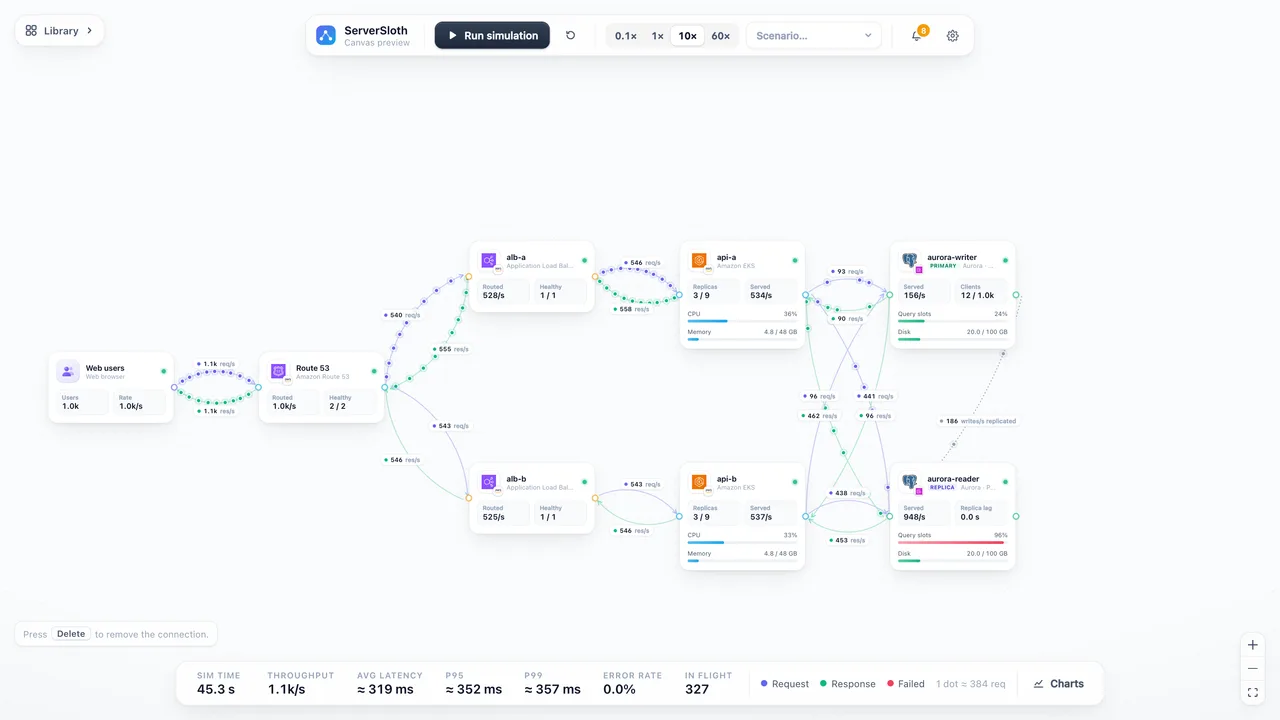
Route 53 → two zones, each with an ALB and EKS → Aurora writer in zone A with a replica in zone B. Zone A fails at 40 s.
What this architecture teaches
Multi-zone designs survive the loss of a whole data centre. Each zone has its own load balancer and application tier; DNS health checks decide where users go.
At 40 seconds zone A fails — taking its load balancer, servers and the database writer with it. Route 53 sends everyone to zone B within one health-check cycle; reads continue from the zone-B replica.
Writes fail until the replica in zone B is promoted to primary. Notice how zone B’s application tier has to scale up to take double the traffic.
What to look for
- Route 53 health checks move traffic to zone B
- Writes fail until the zone-B replica is promoted
- Reads keep working from zone B
Components
- Web users — Web browser (Traffic source)
 Route 53 — Amazon Route 53 (DNS)
 alb-a — Application Load Balancer (Load balancer)
- alb-b — Application Load Balancer (Load balancer)
 api-a — Amazon EKS (Server group)
- api-b — Amazon EKS (Server group)
 aurora-writer — Amazon Aurora (Relational DB)
- aurora-reader — Amazon Aurora (Relational DB)
Scripted events
- At 40 s: availability zone A fails